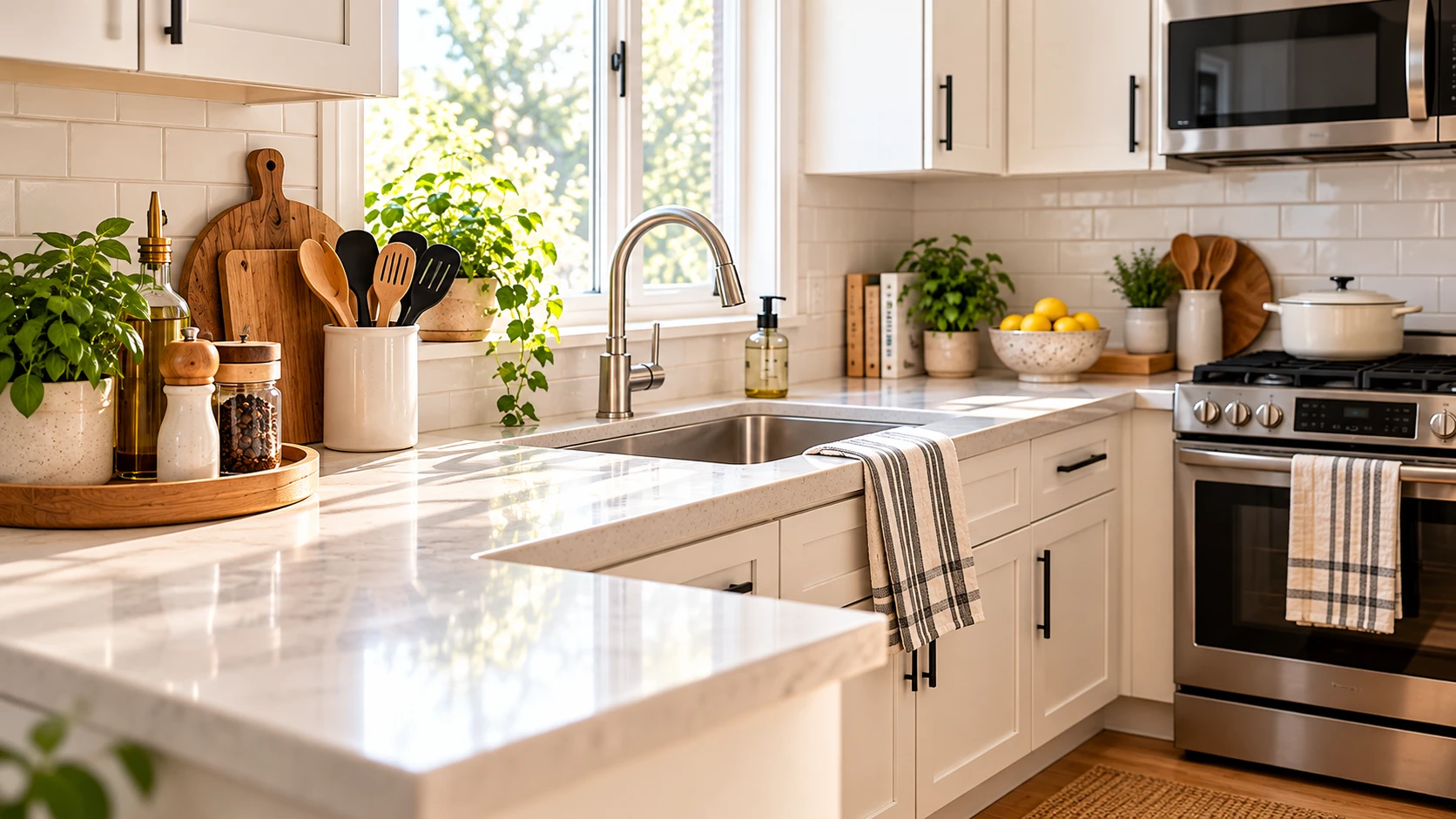
You clean your kitchen, put a few things away, and wipe down the counters. But somehow, a few hours later, everything is right back where it started.
The coffee maker sits beside the toaster. Cooking utensils collect near the stove. Mail lands next to the fruit bowl, and small appliances take up the workspace you need to prepare meals.
If this sounds familiar, you probably don’t need to clean more often. You need a better system for deciding what belongs on your counters and where everything else should go.
The good news is that you can make a small kitchen feel more organized without remodeling, buying expensive cabinets, or hiding everything you use every day.
These practical kitchen counter organization ideas will help you reclaim your workspace while keeping your kitchen comfortable, attractive, and easy to maintain.
1. Decide What Actually Deserves a Spot on Your Counter
The first step is not buying organizers. It’s deciding what you genuinely need within reach.
Look at everything currently sitting on your countertops and ask yourself three questions:
- Do I use this almost every day?
- Is it difficult or inconvenient to store somewhere else?
- Does keeping it here make cooking easier?
Your coffee maker might deserve a permanent spot if you use it every morning. An appliance you use twice a month probably doesn’t need to occupy valuable workspace.
Create three groups:
Keep on the counter: Everyday essentials you use frequently.
Store nearby: Items you use regularly but don’t need to see all day.
Remove: Things that don’t belong in the kitchen or that you no longer use.
You don’t need completely empty countertops. You need enough clear space to work comfortably.
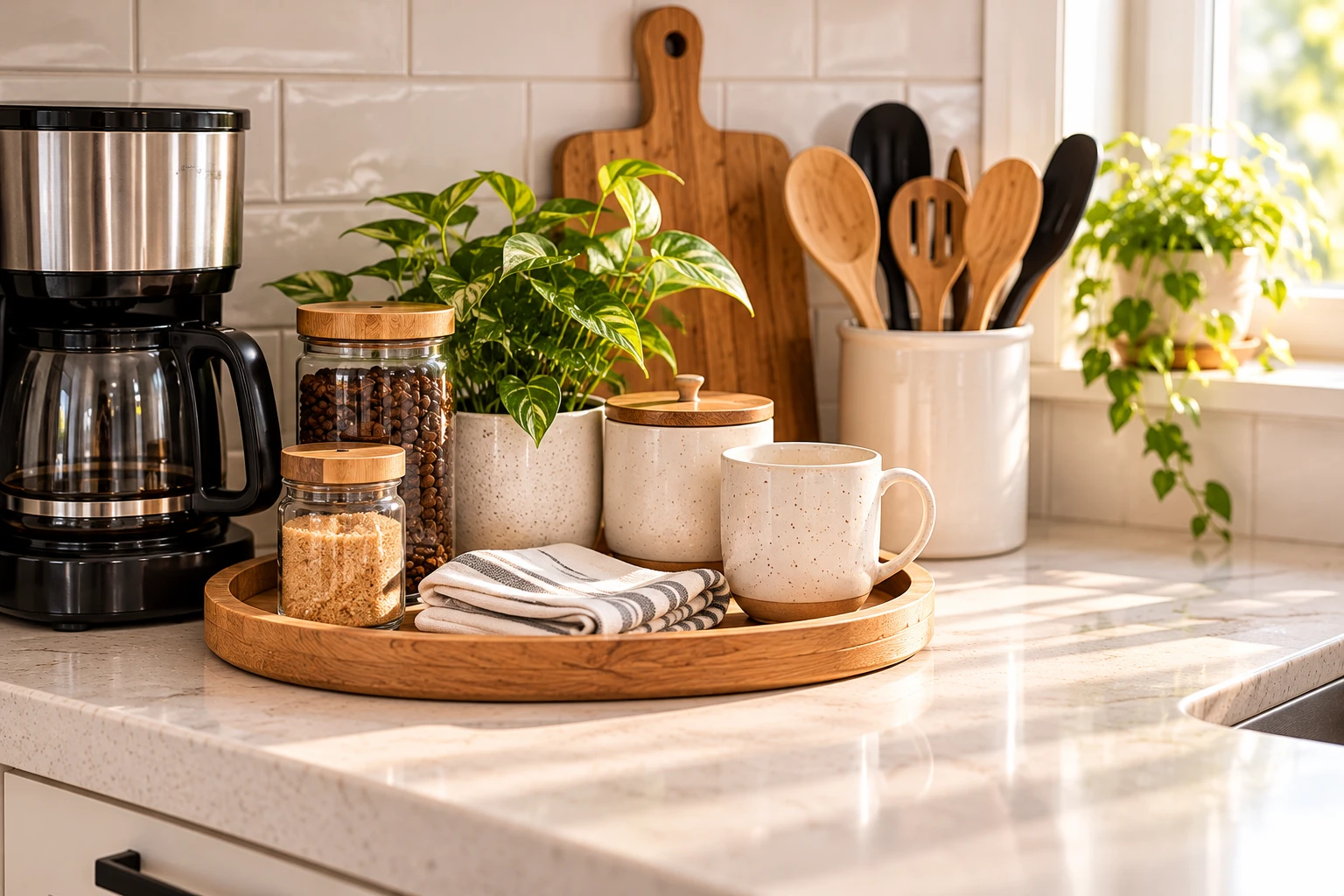
2. Create a Coffee Station Without Losing Your Workspace
Coffee makers, mugs, sugar containers, coffee bags, and accessories can quickly take over a small kitchen.
Instead of spreading everything across the counter, create one compact coffee station.
Start by grouping your essentials together. Use a small tray to keep frequently used accessories contained, and store extra mugs or coffee supplies in a nearby cabinet.
If your counter is particularly narrow, consider a compact coffee cart or a shelf that fits your available space.
Products worth considering:
- A small coffee station tray
- A compact mug holder
- Airtight coffee storage containers
- A narrow rolling cart
Choose only what solves your specific problem. A tray is helpful when it contains a few items, but it won’t create more space if you use it to collect clutter.
3. Move Cooking Essentials Closer to Where You Use Them
Cooking utensils often accumulate beside the stove because that’s where they’re most convenient.
You don’t necessarily need to put everything away. Instead, reduce the number of items occupying your workspace.
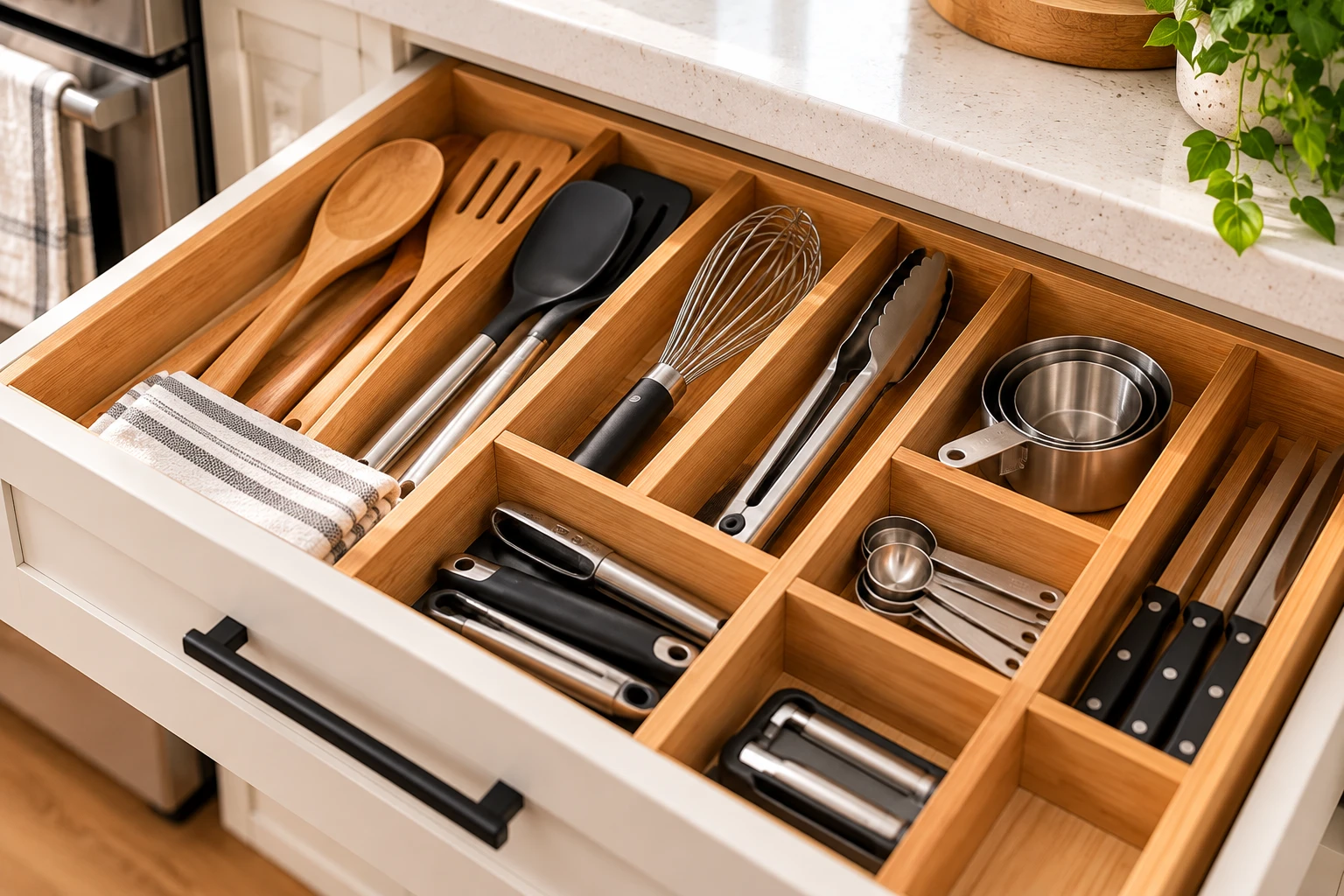
Keep your most frequently used utensils in one compact holder. Store duplicate tools, specialty gadgets, and less frequently used utensils in a nearby drawer.
If your drawers are crowded, drawer dividers can help you use the space more efficiently.
For kitchens with limited counter space, a wall-mounted utensil rail may also be worth considering, provided it can be installed safely and kept away from heat sources.
Products worth considering:
- Adjustable drawer dividers
- A compact utensil holder
- A wall-mounted utensil rail
- A magnetic knife strip suitable for your kitchen setup
The goal is to keep cooking tools accessible without allowing them to spread across the entire counter.
4. Use the Space Inside Your Cabinets
Sometimes the problem isn’t a lack of cabinets. It’s that the available space isn’t being used efficiently.
Before purchasing more storage, inspect the cabinets closest to your main workspace.
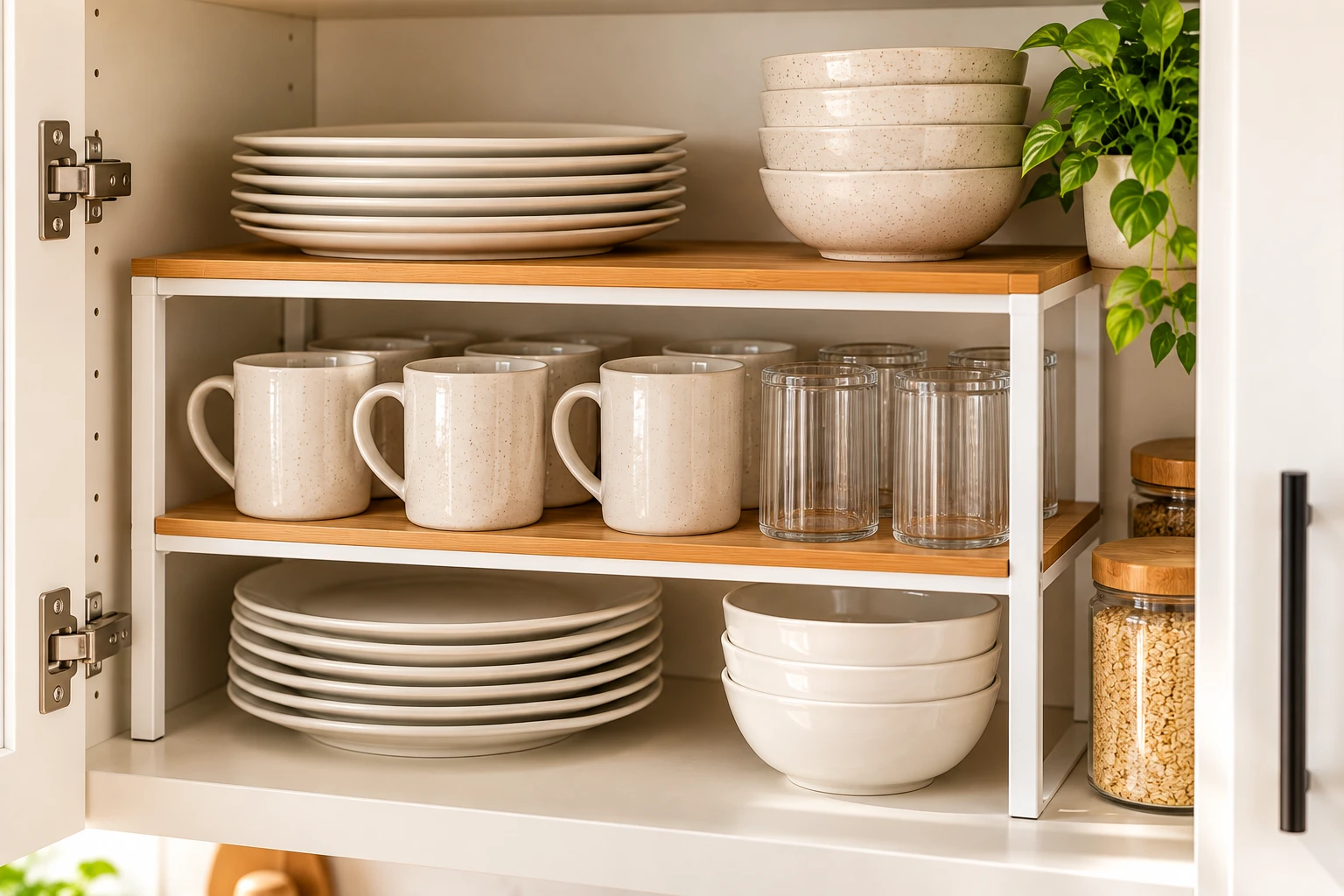
Could you store more items there if you added a shelf riser? Would drawer dividers help? Could you move occasional-use appliances to a higher shelf?
A few small adjustments can make existing cabinets more functional.
Consider:
- Shelf risers for cups, bowls, and pantry items
- Drawer organizers for utensils and small tools
- Pull-out organizers for suitable cabinets
- Vertical dividers for cutting boards and baking sheets
Measure the available space before buying anything. Cabinet dimensions, hinges, plumbing, and shelf heights can affect whether an organizer will fit.
For more ideas, read our guide to 18 Amazon Kitchen Organization Products That Actually Save Space.
5. Give Mail, Keys, and Random Items a Different Home
Not everything cluttering your kitchen counter belongs in the kitchen.
Mail, receipts, keys, chargers, school papers, and bags often land on the nearest available surface because there isn’t an obvious alternative.
Create a designated drop zone somewhere more appropriate, such as an entryway shelf, wall organizer, or small basket near the door.
If you must keep paperwork in the kitchen, use one compact file holder and establish a regular time to sort it.
The important part is creating a convenient place for these items before they reach your countertop.
A beautiful kitchen organizer won’t solve a problem caused by belongings that don’t have a proper home.
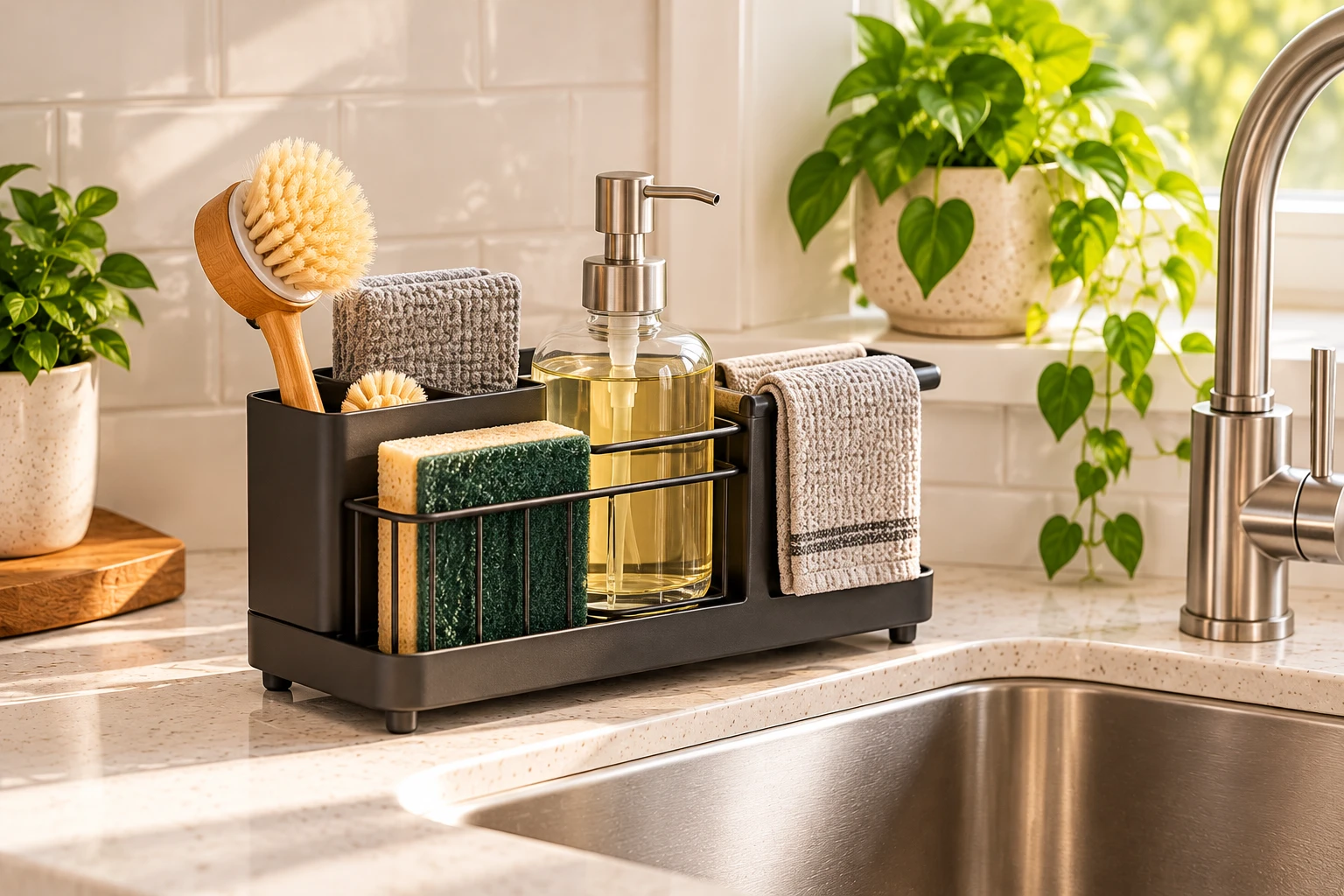
6. Make the Space Around Your Sink Easier to Maintain
The area around the kitchen sink often becomes crowded with dish soap, sponges, brushes, hand soap, and dish-drying accessories.
Start by removing anything you don’t use regularly.
Then decide which essentials need to remain within reach and which can be stored under the sink.
A compact sink caddy can contain sponges and brushes. A suitable dish-drying rack can help if you wash dishes by hand, but choose one that fits your sink and doesn’t unnecessarily consume your preparation area.
If you use a drying mat instead, put it away when it’s no longer needed, provided your dishes and the mat are dry.
Products worth considering:
- A compact sink caddy
- A space-saving dish-drying rack
- A washable drying mat
- An under-sink organizer for cleaning supplies
Keep cleaning products safely stored, away from food and food-contact items. Make sure the cabinet remains accessible and that organizers don’t interfere with plumbing or create moisture problems.
7. Store Small Appliances According to How Often You Use Them
Small appliances can be some of the biggest countertop space users.
Think about your toaster, blender, air fryer, stand mixer, slow cooker, and food processor.
Instead of giving every appliance a permanent spot, group them by how frequently you use them.
Daily-use appliances: Keep accessible, with enough room to operate them safely.
Weekly-use appliances: Store in an easy-to-reach cabinet or pantry shelf.
Occasional-use appliances: Place in less frequently accessed storage, provided they can be lifted safely.
Don’t put heavy appliances on high shelves or store them somewhere that makes them difficult to retrieve.
You should also follow each appliance manufacturer’s ventilation, clearance, and operating instructions. Some appliances need open space around them when in use.
A little planning can free up a surprising amount of counter space without making everyday cooking inconvenient.
8. Use Vertical Storage Carefully
When floor and cabinet space are limited, vertical storage can help.
Depending on your kitchen layout, useful options may include:
- Wall-mounted shelves
- Magnetic spice organizers
- Hooks for lightweight kitchen accessories
- Cabinet-door organizers
- A narrow shelf for frequently used items
However, more storage isn’t always better.
Too many shelves, baskets, and hanging accessories can make a small kitchen look visually busy. Keep the most frequently used items accessible and avoid placing heavy or breakable objects where they could fall.
If you’re renting, look for suitable removable solutions, but always check the manufacturer’s weight limits and installation requirements.
Choose one or two vertical storage solutions that address an actual problem rather than filling every available wall.
9. Reduce Visual Clutter Without Sacrificing Function
A kitchen can be clean and still look cluttered.
This often happens when too many unrelated objects compete for attention: mismatched containers, packaging, decorative items, appliances, and small accessories.
You don’t need to buy matching containers for everything.
Instead, try these simple changes:
- Group similar items together.
- Keep decorative objects to a minimum.
- Store duplicate supplies out of sight.
- Use one tray to contain a small group of everyday essentials.
- Choose a consistent look for any storage that remains visible.
- Leave some counter space completely empty.
If you enjoy decorating your kitchen, keep one or two items you genuinely love. The goal is not to remove personality from your home. It’s to make the space feel intentional.
10. Create a Five-Minute Kitchen Counter Reset
The easiest way to keep counters clutter-free is to make resetting them part of your routine.
You don’t need to reorganize the entire kitchen every evening.
Try this five-minute reset:
Minute 1: Put away food, ingredients, and items left over from cooking.
Minute 2: Return appliances and utensils to their designated places.
Minute 3: Move mail, keys, and unrelated belongings to their proper homes.
Minute 4: Wash or put away dishes and clear the sink area.
Minute 5: Wipe the counters and leave your main preparation area clear.
The routine works best when every item already has a convenient place to go.
If putting something away takes too many steps, reconsider where you’re storing it.
The best organization system is one you can maintain even on a busy day.
What to Buy to Keep Kitchen Counters Clutter-Free
If you’ve tried decluttering but still struggle with limited space, a few carefully chosen products may help.
Here are the most useful categories to consider:
- Cabinet shelf risers: Help you make better use of vertical space inside cabinets.
- Adjustable drawer dividers: Keep utensils and small kitchen tools separated.
- Compact sink caddy: Keeps dishwashing essentials contained.
- Small countertop tray: Groups a few frequently used items into one defined area.
- Under-sink organizer: Makes cleaning supplies easier to access.
- Magnetic spice organizer: Can free up cabinet or counter space when compatible with your kitchen.
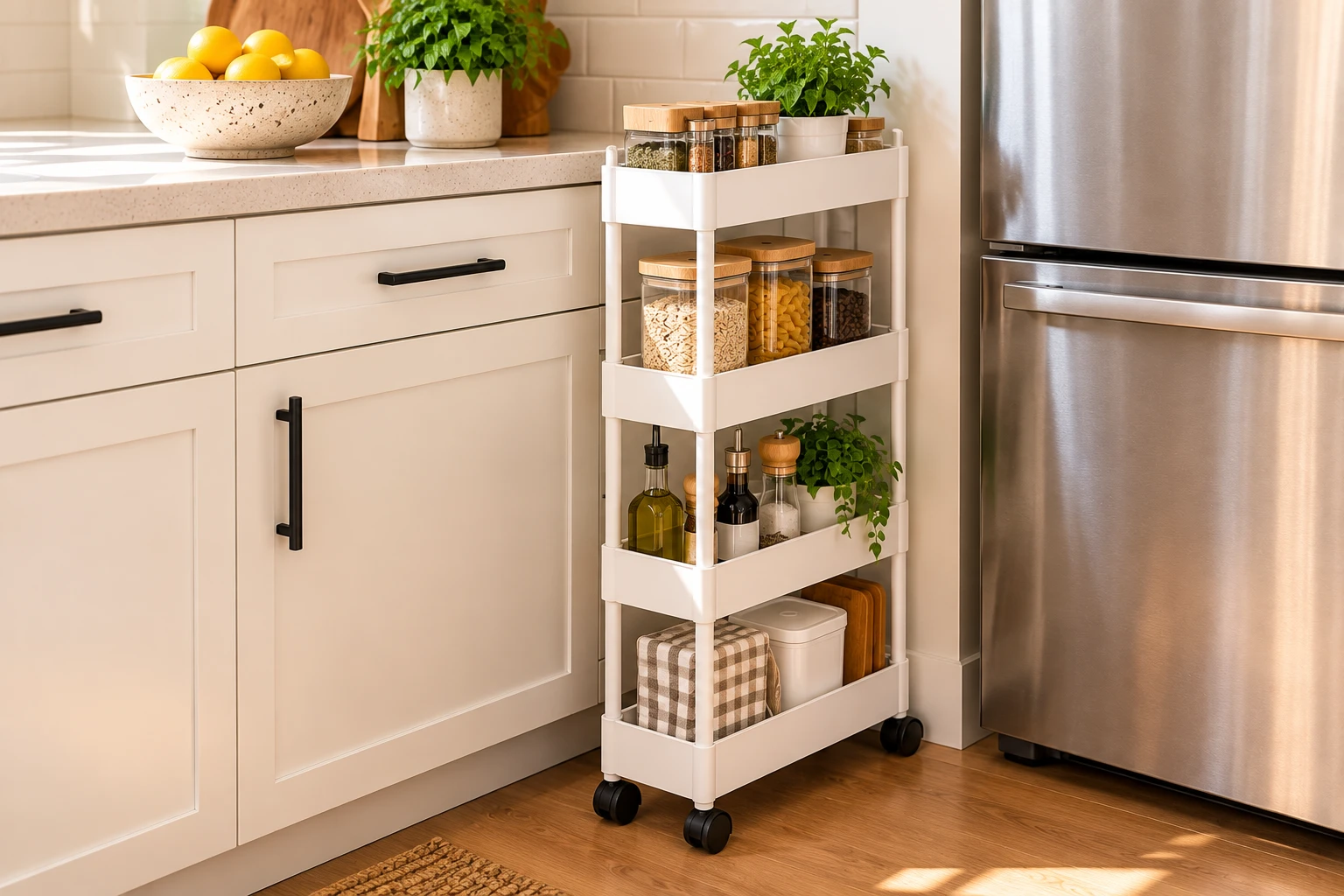
- Slim rolling cart: Provides additional storage if you have a suitable gap and enough clearance.
- Vertical cutting-board organizer: Keeps boards and baking sheets organized inside a cabinet.
- Compact dish-drying rack: Helps manage dishes in kitchens without much counter space.
- Drawer storage containers: Keep small accessories organized without adding more items to the countertop.
The goal isn’t to buy all ten. Choose the products that solve the problems you actually have.
Common Mistakes That Make Kitchen Counters Cluttered Again
Even a well-organized kitchen can become messy if the underlying habits don’t change.
Watch out for these common mistakes:
Buying organizers before decluttering. You can end up creating more storage for items you don’t need.
Keeping everything within reach. Convenient access doesn’t mean every item needs to remain visible.
Choosing storage that is difficult to use. If an organizer is awkward to access, you’re less likely to put things away.
Ignoring the source of the clutter. Mail, bags, and personal belongings need their own designated homes.
Trying to make every surface decorative. Empty workspace is useful, especially in a small kitchen.
Creating a system that requires too much effort. The simpler it is to reset your kitchen, the more likely you are to maintain it.
Frequently Asked Questions
How do I keep my kitchen counters clutter-free in a small kitchen?
Start by removing items you rarely use, storing appliances according to how frequently you need them, and assigning everyday essentials a designated home. Use cabinet space efficiently before adding more organizers.
What should I keep on my kitchen counters?
Keep items you use frequently and that benefit from being accessible, such as a daily-use coffee maker or a compact utensil holder. The right selection depends on your cooking habits and available workspace.
How can I organize kitchen counters without buying anything?
Remove unrelated belongings, return unused appliances to cabinets, group similar items, and establish a simple daily reset. Rearranging existing cabinet storage can also free up space.
What products help organize a small kitchen?
Shelf risers, drawer dividers, compact sink caddies, vertical organizers, and slim rolling carts can help when they fit the available space and solve a specific storage problem.
How do I stop clutter from returning to my kitchen counters?
Give every frequently used item a convenient place, create a separate home for mail and personal belongings, and spend a few minutes resetting the kitchen each day.
Final Thoughts
Keeping your kitchen counters clutter-free isn’t about having a perfectly styled kitchen or hiding everything you own.
It’s about making your kitchen easier to use.
When everyday essentials have a place, cabinets work efficiently, and unrelated belongings stay off your counters, even a small kitchen can feel more spacious and functional.
Start with one area that frustrates you most. Clear it, create a simple system, and only buy an organizer if you genuinely need one.
You may find that the best kitchen upgrade isn’t a renovation at all. It’s reclaiming the workspace you already have.
Shop the Home Finds
Looking for practical ways to make your kitchen work better? Explore these organization solutions:
- Shop the countertop tray on Amazon
- Shop the kitchen sink organizer on Amazon
- Shop cabinet shelf risers on Amazon
- Shop kitchen drawer dividers on Amazon
- Shop the slim rolling storage cart on Amazon
This post may contain affiliate links. If you purchase through these links, Home Finds Studio may earn a commission at no additional cost to you.